
About this item
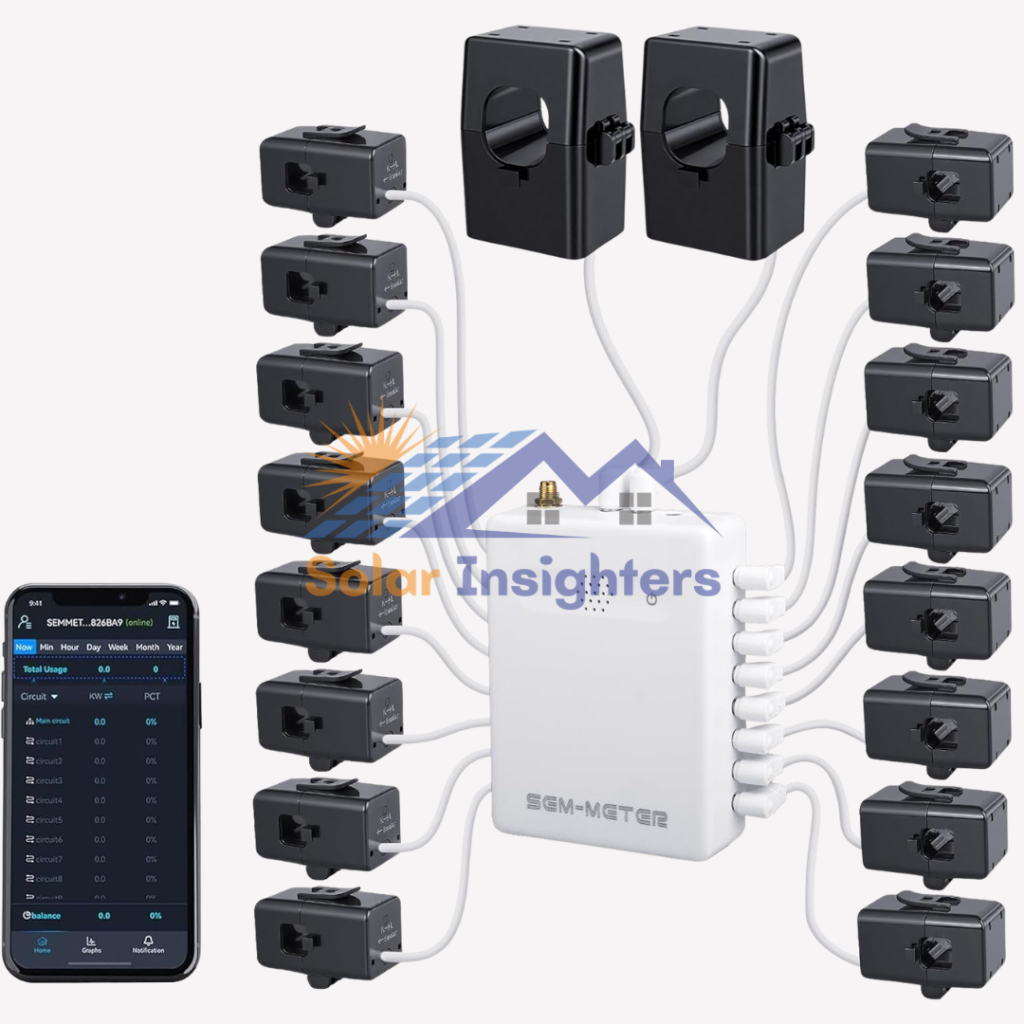
Smart Home Energy Monitor with 50A Circuit Sensors
A Smart Home Energy Monitor with 50A Circuit Sensors is a device that helps you track and manage the electrical usage of your home or business in real time. It connects to your electrical panel and uses 50 A current sensors (CT clamps) to measure how much electricity is flowing through specific circuits, allowing you to understand usage patterns, identify energy‑hungry appliances, and lower electricity bills.
These systems often pair with a mobile app or web dashboard, giving you insights into overall consumption, historical trends, cost estimates, and even alerts for unusual usage.
How It Works
- Installation in the Electrical Panel
- The energy monitor is installed inside your breaker panel and connected to your Wi‑Fi network.
- 50 A CT (Current Transformer) sensors are clipped around the hot wires of specific circuits you want to monitor.
- Measuring Electricity Use
- The sensors detect the electrical current flowing through those circuits.
- The monitor converts this into real‑time power (watts) data you can view on a phone or computer.
- App Integration & Analytics
- Data is sent to a smartphone app or cloud dashboard.
- You can track:
- Instant power usage
- Daily/weekly/monthly trends
- Cost estimation based on your electricity rate
- Alerts when usage spikes
Key Features
📊 Real‑Time Energy Monitoring
See instant power usage for selected circuits and your whole home.
📱 Smartphone App or Web Dashboard
Use your phone or browser to:
- View consumption graphs and history
- Compare usage over time
- Set energy budgets and alerts
⚡ 50A Circuit Sensors (CT Clamps)
Designed for circuits drawing up to 50 amps, suitable for:
- Washing machines
- Dishwashers
- Water heaters
- EV chargers
- Air conditioning units
💡 Historical Usage Insights
Track energy use by:
- Hour
- Day
- Week
- Month
- Year
🔔 Alerts & Notifications
Receive warnings for:
- Abnormal spikes in usage
- Surpassing preset power limits
- Scheduled cost estimates
💰 Cost Estimation Tools
Estimate electricity costs based on:
- Your local rate (/kWh)
- Current consumption trends
🌐 Wi‑Fi or Cloud Connectivity
Syncs with home internet to update data in real time.
🔌 Expandable Monitoring
Can add more CT sensors or expansion modules to monitor more circuits if supported.
Pros and Cons
| Pros (Advantages) | Cons (Disadvantages) |
|---|---|
| Real‑time energy usage insights | Requires electrical panel installation |
| Helps reduce electricity bills | Installation may need professional help |
| Circuit‑level monitoring with 50 A sensors | Depends on Wi‑Fi connectivity |
| App alerts and historical trends | Cloud subscription may be required |
| Cost estimation and budgeting tools | Setup may take time |
| Can identify energy‑hungry appliances | Not all circuits may be monitored at once |
Best Uses
A Smart Home Energy Monitor with 50A Circuit Sensors is ideal for:
- Tracking large appliances like EV chargers, HVAC, water heaters
- Understanding peak and off‑peak usage times
- Homeowners who want better control over energy costs
- Energy‑saving planning for renovations or upgrades
- Comparing usage between circuits and appliances
Installation Overview
📌 Important: Installation involves working inside the electrical panel. It’s recommended to hire a licensed electrician unless you are experienced with electrical systems.
Basic steps:
- Turn off the main breaker
- Mount the energy monitor inside the panel
- Clip the 50 A CT sensors on the hot wires of circuits you want to track
- Connect the monitor to home Wi‑Fi
- Configure the smartphone app
Why It’s Valuable
Home energy monitors provide transparency into electricity usage that utility bills can’t offer. Instead of just knowing how much you pay per month, you see how and when power is used. This allows you to:
- Turn off or schedule heavy loads during off‑peak times
- Detect unexpected power draws
- Make informed decisions about upgrades (solar, batteries, EV chargers)