
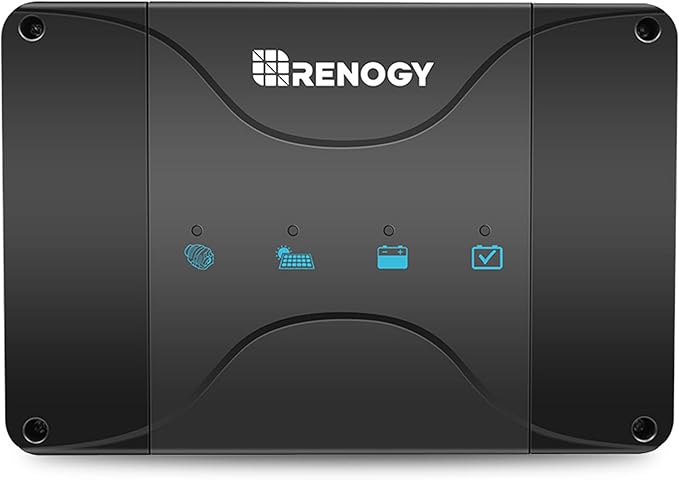
Renogy DC to DC Charger with MPPT 12V 30A Multi-Stage Charging
| Brand | Renogy |
| Output Voltage | 12 Volts (DC) |
| Product Dimensions | 9.6″D x 3″W x 5.7″H |
| Item Weight | 3.13 Pounds |
| Input Voltage | 12 Volts |
About
Renogy DC to DC Charger with MPPT
The Renogy DC to DC Charger with MPPT is a hybrid charger that combines alternator-based charging with solar input, giving you a versatile and efficient way to charge auxiliary batteries in RVs, camper vans, boats, or off-grid vehicles. It ensures your battery stays healthy and topped up whether you’re on the road or parked under the sun.
Why MPPT Matters
MPPT (Maximum Power Point Tracking) enables the charger to harvest maximum available power from solar panels — often 10‑30% more efficient than standard controllers. When connected to a solar panel, this charger optimizes solar input while simultaneously managing alternator power, ensuring a steady and efficient charge. This makes the system ideal for lithium (LiFePO₄) or lead‑acid battery banks, ensuring safe charging with proper voltage and current regulation.
Key Features
Dual Input Sources — accepts both alternator/DC input and solar input, giving flexibility for charging whether driving or parked.
Smart Multi‑Stage Charging — features optimized charging curves for different battery types, improving battery longevity and performance.
Battery Compatibility — works with common battery chemistries including LiFePO₄, AGM, gel, and flooded lead‑acid banks.
Automatic Switching — automatically detects input source and switches to the most appropriate power source (solar or alternator), simplifying battery management.
Compact & Rugged Design — built for installation in mobile or outdoor settings, with durable housing and efficient cooling for stable performance.
Ideal Use Cases
This DC‑to‑DC charger is excellent for:
RVs and caravans — keeping house batteries topped while driving or parked.
Boats and marine setups — providing clean, regulated power to auxiliary systems onboard.
Off‑grid vans and camper conversions — combining solar charging and alternator charging for consistent energy.
Backup power systems — maintaining battery banks for off-grid cabins, remote installations, or seasonal setups.