
About this item
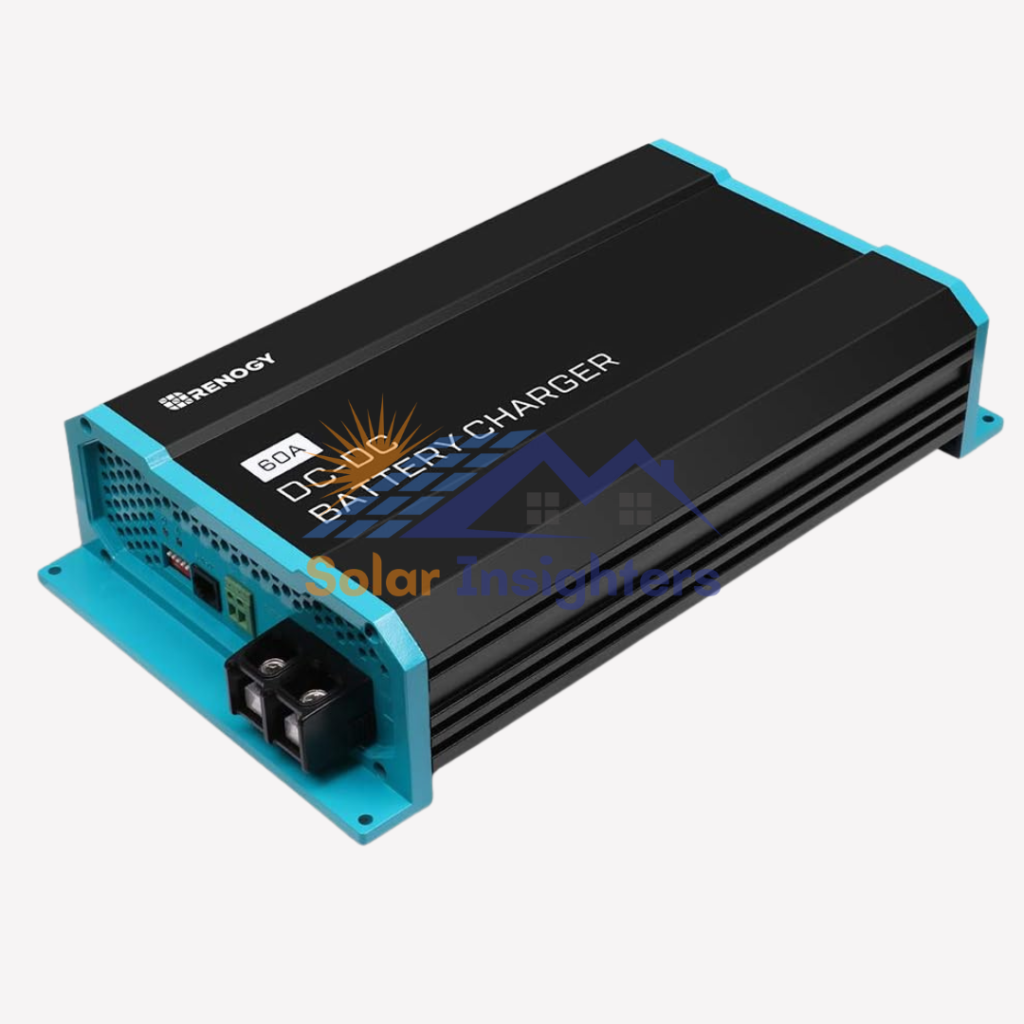
Renogy 60A Battery Charger With Multi‑Stage Charging
The Renogy 60 A Battery Charger with multi‑stage charging is a powerful and reliable charger designed to safely charge and maintain large battery banks used in solar systems, RVs, boats, backup power setups, and off‑grid installations. This charger uses advanced multi‑stage algorithms to maximize battery life, ensure efficient charging, and prevent battery damage.
With a 60 amp output capacity, it’s well‑suited for deep cycle batteries, lithium (LiFePO₄) setups, or large lead‑acid battery banks.
Key Features
⚡ 60 Amp Charging Capacity
Delivers up to 60 A of current, enabling fast and effective charging of medium‑to‑large battery banks.
🔋 Multi‑Stage Charging
Supports multiple charging stages — typically:
- Bulk – high current to quickly recharge
- Absorption – controlled charging to stabilize voltage
- Float / Maintenance – keeps battery at full charge without overcharging
Multi‑stage charging enhances battery performance and prolongs usable life.
🧠 Smart Charging Algorithms
Automatically adjusts voltage and current based on battery type and condition, ensuring safe and efficient charging.
🔌 Wide Battery Compatibility
Works with multiple battery types, including:
- Flooded lead‑acid
- AGM
- Gel
- LiFePO₄ (with correct settings)
🌡 Temperature Compensation
Adjusts charging parameters based on temperature — important for battery longevity and safety in varying climates.
📊 Digital Display & Indicators
Built‑in display or LED indicators show:
- Charging status
- Current and voltage
- Error notifications
- Battery condition
🛡 Protection Features
Includes:
- Over‑charge protection
- Over‑current protection
- Short‑circuit protection
- Reverse polarity protection
- Over‑heating protection
These safeguards keep both the charger and batteries safe.
💪 Heavy‑Duty Construction
Designed for long‑term use in workshops, garages, marine environments, and other demanding settings.
How It Works
- Connect the charger to the battery bank via proper terminals.
- The charger detects battery type and voltage.
- Charging begins in bulk mode for fast voltage rise.
- It transitions to absorption to balance and stabilize.
- Finally, it enters float/maintenance mode to keep batteries healthy when fully charged.
This staged charging reduces stress on the battery and prevents overheating or overcharging.
Pros and Cons
| Pros (Advantages) | Cons (Disadvantages) |
|---|---|
| High 60 A charging rate | Requires correct setup for different battery types |
| Multi‑stage charging improves battery life | Larger and heavier than small chargers |
| Works with multiple battery chemistries | May need temperature sensor installation |
| Protection features keep batteries safe | Not ideal for very small batteries |
| Can maintain battery banks long‑term | Display may require learning to interpret |
| Suitable for large systems | Requires safe ventilation during use |
Best Uses
The Renogy 60 A Battery Charger is ideal for:
✔ Solar battery banks
✔ RV and camper battery systems
✔ Marine and boating batteries
✔ Backup power battery banks
✔ Off‑grid homes and cabins
✔ Workshop or garage battery maintenance
Its multi‑stage algorithm helps ensure batteries are fully charged, healthy, and maintained over long periods.
Why Multi‑Stage Charging Matters
Multi‑stage charging provides benefits like:
- Faster initial charging (bulk stage)
- Balanced and controlled charging (absorption)
- Safe maintenance without overcharge (float)
This method is especially critical for deep‑cycle batteries and lithium setups, where proper charging can significantly increase lifespan and performance.
Installation & Setup Tips
✔ Use thick and quality cables rated for high current to reduce voltage drop.
✔ Make sure the area is well‑ventilated to dissipate heat.
✔ Confirm battery type selection before you begin charging.
✔ Attach temperature sensors if supported, especially in extreme climates.