
About this item
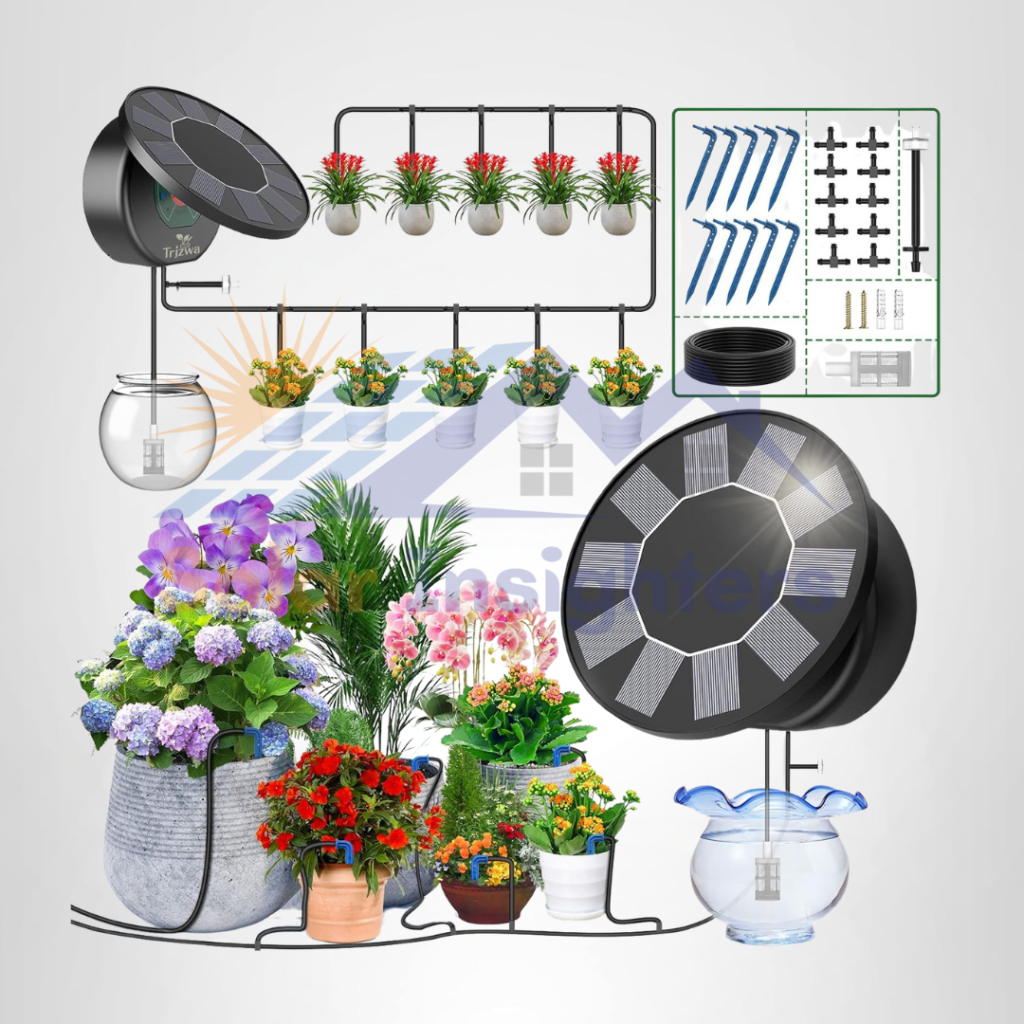
Solar Automatic Drip Irrigation System Kit
The Solar Automatic Drip Irrigation System Kit is a smart, sustainable watering solution that uses solar energy to power automatic irrigation for gardens, lawns, farms, and landscaped areas. By combining solar-powered pumping with adjustable drip emitters and timers, this kit aims to deliver water directly to plant roots in precise amounts — conserving water, reducing labor, and improving plant health.
This review explores core features, performance, water efficiency, installation ease, pros and cons, and real-world value for 2026.
What Is a Drip Irrigation System?
Drip irrigation is a watering method where water drips slowly to the roots of plants through a network of tubing and emitters. This method minimizes evaporation and runoff, ensuring plants get moisture where they need it most. When combined with solar power and automatic control, the system becomes highly efficient and ideal for areas with limited access to electricity.
Key Components
| Component | Purpose |
|---|---|
| Solar Panel | Generates power from sunlight |
| Pump | Moves water from source to irrigation lines |
| Filter | Removes debris to prevent clogging |
| Tubing | Channels water throughout the garden |
| Drip Emitters | Deliver controlled water to plant roots |
| Timer/Controller | Automates watering schedules |
| Connectors & Stakes | Secure system layout |
| Water Source Adapter | Connects to tanks, barrels, or reservoirs |
Design & Build Quality
The Solar Automatic Drip Irrigation System Kit includes components designed for outdoor use. Tubing, emitters, and connectors are typically made from weather-resistant materials that withstand sun, soil, and moisture exposure. Solar panels are built to tolerate outdoor conditions, including rain and prolonged sunlight.
Durable materials and modular parts make the system customizable for different garden sizes and plant types.
Solar Performance & Power
Solar-Powered Efficiency:
Solar panels capture sunlight and convert it into electricity.
The pump runs using solar power, reducing or eliminating electricity costs.
Battery or capacitor storage (if included) allows watering during low light.
Best performance in:
Full sunlight areas
Morning to early afternoon operation
Places with regular sunny days
Solar performance helps reduce operating costs and makes the system suitable for remote locations or areas without reliable grid access.
Water Efficiency & Conservation
Drip irrigation delivers water directly to plant roots, which significantly boosts water efficiency compared to overhead sprinklers or hoses. Benefits include:
Reduced evaporation and runoff
Lower water usage overall
Healthier plant growth through consistent moisture
Customizable watering rates by plant type
Automatic control ensures water is delivered on schedule without manual effort.
Installation & Ease of Use
Typical Setup Steps
Place the solar panel in a sunny location with minimal shade.
Mount the pump near the water source (tank, barrel, or tank).
Run tubing through garden beds or lawn areas.
Attach drip emitters at plant bases.
Install the controller/timer to set watering frequency and duration.
Test the system to ensure even water distribution.
No professional installation is usually required; careful planning and layout help optimize performance.
Automation & Control
The kit typically includes a controller or timer that lets you:
Set watering schedules (times and durations)
Adjust frequencies based on plant types or seasons
Program pauses during rain or low sunlight (where supported)
Automatic control saves time and avoids under- or over-watering — crucial for vegetable gardens, flower beds, and fruit trees.
Pros & Cons
| Pros | Cons |
|---|---|
| Solar powered — no electricity cost | Solar output depends on sunlight |
| Water efficient drip delivery | Pump capacity may limit large gardens |
| Reduces manual watering effort | Installation takes planning and time |
| Easy to expand or customize | Filters require periodic cleaning |
| Ideal for remote or off-grid areas | Initial cost higher than basic hoses |
| Promotes healthier plant growth | Not ideal for lawns with high flow needs |
Real-World Use Cases
Home Gardens & Flower Beds:
Water plants on a set schedule without daily manual effort.
Small Farms & Orchards:
Efficient water delivery to rows of crops or fruit trees.
Greenhouses & Nurseries:
Consistent moisture control for sensitive seedlings and plants.
Remote Properties:
Solar power enables irrigation where grid electricity isn’t accessible.