
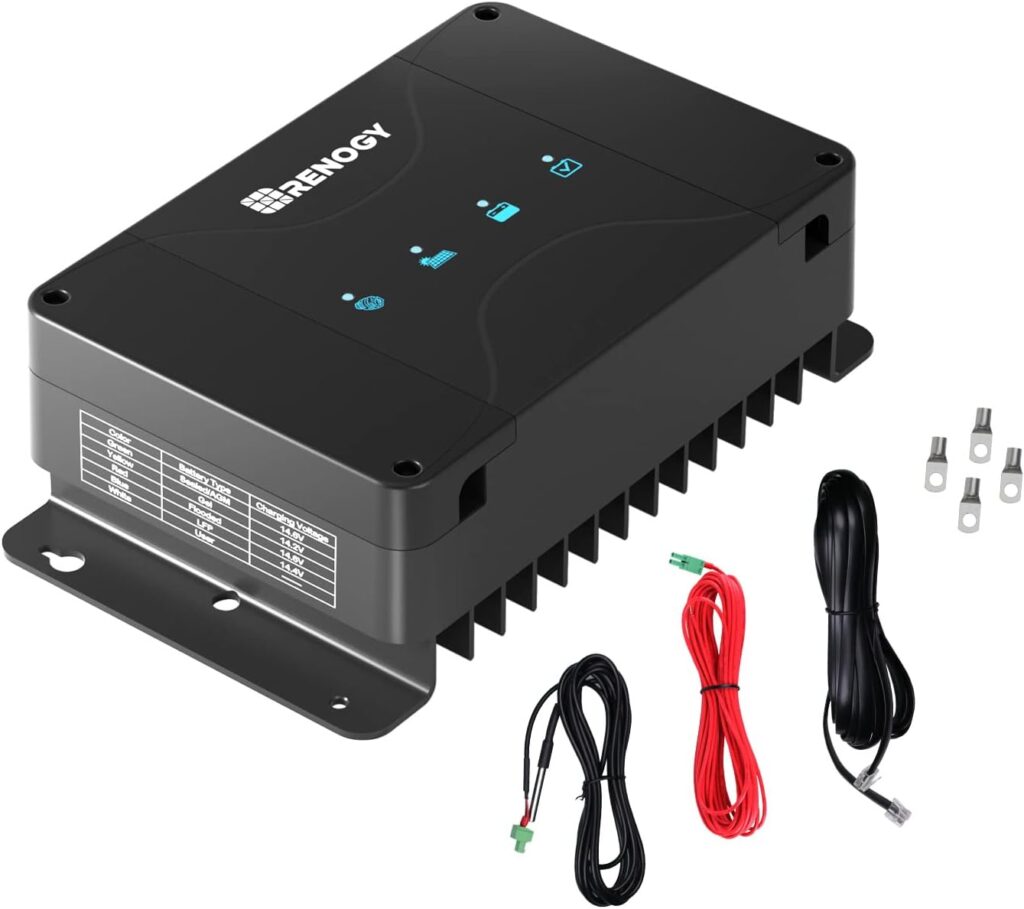
Renogy 12V 50A DC to DC Battery Charger with MPPT
| Brand | Renogy |
| Output Voltage | 12 Volts (DC) |
| Color | Charger for Solar Panel and Alternator |
| Product Dimensions | 3″D x 9.6″W x 5.7″H |
| Item Weight | 3.13 Pounds |
About
Renogy 12V 50A DC‑to‑DC Battery Charger with MPPT
The Renogy 12V 50A DC‑to‑DC Battery Charger with MPPT is a robust charging solution designed to keep your auxiliary battery bank charged whether you’re driving, parked, or relying on solar power. With its high current capacity, MPPT solar integration, and flexible setup, it’s ideal for vans, RVs, boats, off‑grid systems, and large battery banks.
Why It Stands Out
High Output (50A): The 50‑amp output means it can charge larger battery banks quickly — well-suited for setups powering fridges, inverters, lights, or multiple appliances.
MPPT Solar Input + Alternator Input: It accepts input from both a vehicle alternator (while driving) and a solar panel array. The MPPT module optimizes solar charging efficiency to harvest maximal power from panels under varying sunlight conditions.
Multi‑Battery Chemistry Support: Compatible with a variety of battery types including AGM, gel, flooded lead‑acid, and lithium (e.g. LiFePO₄), giving flexibility depending on your power storage preference.
Smart Charging Algorithm: Uses a multi‑stage charging profile (bulk, absorption, float, plus lithium-specific settings) to ensure batteries are charged safely and reach full capacity without overcharging.
Automatic Source Switching: The charger automatically switches between alternator power and solar input depending on availability, simplifying charging management and ensuring batteries stay topped up.
Best Use Cases
This charger is great for:
Camper vans, RVs, and caravans with large battery banks
Boats and marine setups needing reliable power for electronics and appliances
Off‑grid cabins, trailers, or remote installations requiring high current charging
Combinations of solar + alternator + battery systems for reliable redundancy
Installation & Usage Considerations
Use quality wiring and proper fuse protection — at 50 A output, wire gauge must be sufficient to prevent voltage drop and overheating.
Ensure good ventilation when installing the unit; high current charging can produce heat that needs adequate airflow.
If using lithium (LiFePO₄) batteries, configure the charger’s battery profile correctly to match charging parameters.
For solar input, panel output must match charger input specifications — overloading or under‑spec panels can reduce efficiency or damage components.