
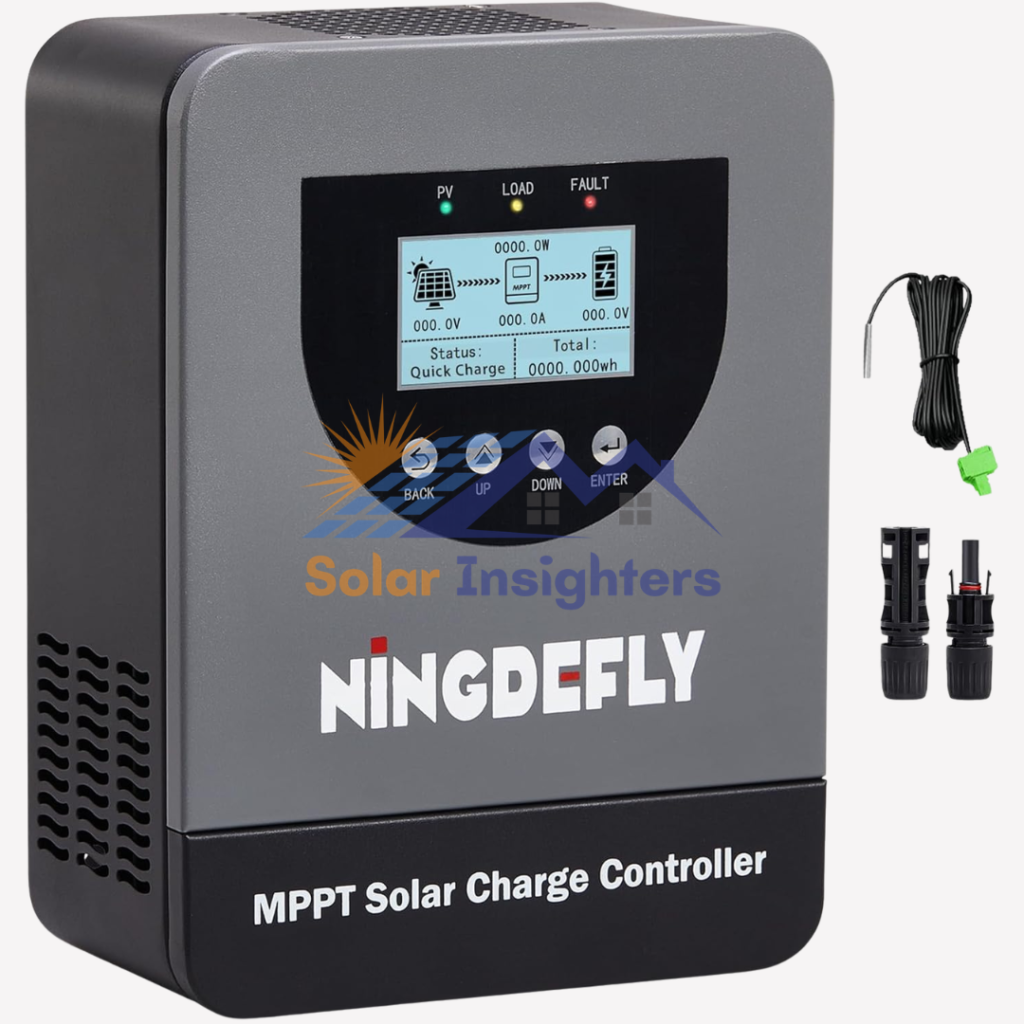
About this item
MPPT Solar Auto Charge Controller for Solar Systems
An MPPT Solar Auto Charge Controller is a key component in modern solar power systems that optimizes the energy harvested from solar panels and safely charges your battery bank. MPPT stands for Maximum Power Point Tracking, a technique that continuously adjusts the input voltage from solar panels to ensure maximum power extraction — especially useful in changing light conditions like cloudy weather or partial shade.
With auto detection of battery voltage and smart charging algorithms, MPPT controllers are more efficient than older PWM controllers and are essential for high‑performance off‑grid solar setups.
Key Features
☀ Maximum Power Point Tracking (MPPT)
The controller continuously finds the optimal voltage and current point to extract the most power from your solar panels, increasing energy harvest by up to 20–30% compared to PWM controllers.
🧠 Auto Voltage Recognition
Automatically detects and supports common system voltages like:
- 12 V
- 24 V
- 36 V
- 48 V
No manual switching required — just connect it and go.
📊 Smart Charging Algorithm
Multi‑stage charging (bulk, absorption, float) delivers efficient and safe battery charging:
- Bulk – quick high current charge
- Absorption – stabilizes voltage
- Float – maintains full charge without damage
📱 LCD/LED Display
Shows real‑time system information like:
- Solar panel voltage & current
- Battery voltage & charge status
- Load status
- Fault or error indicators
🔌 Safety & Protection
Built‑in protections help safeguard your system:
- Over‑charge protection
- Over‑discharge protection
- Reverse polarity protection
- Short‑circuit protection
- Over‑current & Over‑temperature protection
🌡 Temperature Compensation
Adjusts charging parameters based on temperature to protect your battery in hot or cold environments.
📈 Improved Efficiency
MPPT controllers maintain higher efficiency even in less than ideal light conditions, making them ideal for larger solar arrays or complex systems.
How It Works
- Solar panels generate DC power
- The MPPT controller constantly adjusts to the maximum power point
- It converts excess voltage into current that charges the battery efficiently
- The controller regulates charging to ensure battery health and longevity
This results in more usable energy from your solar panels compared with traditional controllers.
Pros and Cons
| Pros (Advantages) | Cons (Disadvantages) |
|---|---|
| Highly efficient solar energy tracking | More expensive than PWM |
| Increases energy harvest (20–30%) | Requires understanding of basic wiring |
| Auto voltage detection | Needs proper cooling |
| Smart, multi‑stage charging | Setup may require reading the manual |
| Works well in variable light | Not always plug‑and‑play for beginners |
| Built‑in safety features | Buyers should size system correctly |
Best Uses
An MPPT Solar Auto Charge Controller is ideal for:
- Off‑grid solar systems
- Home solar battery banks
- RV and camper solar installations
- Boat and marine solar power
- Cabin or tiny house solar setups
- Larger and expandable solar arrays
It’s especially recommended when you have solar panels with higher voltages (e.g., 24 V or 48 V arrays) or need more efficient power use from your panels.
Important Tips for Performance
✔ Match system voltage (12/24/36/48 V) with your panel and battery bank for best efficiency.
✔ Ensure proper ventilation around the controller to prevent overheating.
✔ Use a solar charge controller with adequate amp rating based on your solar panel current (e.g., 30A, 40A, 60A).
✔ Set correct battery type (lead‑acid, AGM, gel, LiFePO₄) for charging profiles.
Why MPPT Matters
Compared to older PWM controllers, MPPT technology:
- Harvests more usable energy from the same panels
- Works better in cloudy or variable light
- Increases system performance and ROI
- Keeps batteries healthier over time
This makes MPPT controllers essential in most modern solar installations.