
About this item
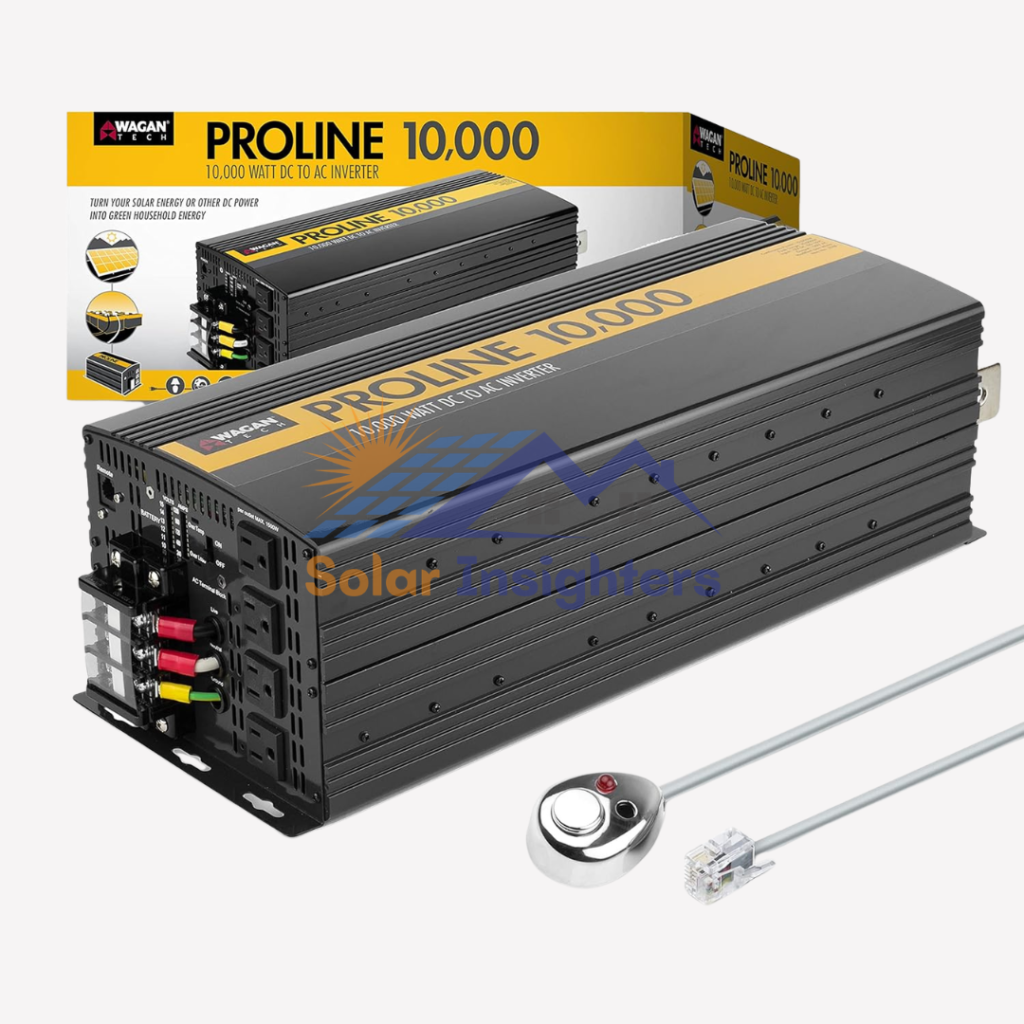
Wagan 12V 10000 W Inverter with Remote Control
The Wagan 12V 10000 W Inverter with Remote Control is a high‑power DC‑to‑AC power inverter designed to convert 12 V vehicle or battery bank power into 120 V AC household power. With a continuous 10000 W rating and remote control, this inverter is ideal for heavy‑duty power needs such as tools, appliances, solar systems, and emergency backup.
This level of output makes it powerful enough to run multiple appliances simultaneously, including power tools, refrigerators, air conditioners (in some duty‑cycle conditions), welders, and more — making it useful for mobile work sites, RVs, large off‑grid solar setups, and emergency backup power.
Key Features
⚡ 10000 W Continuous Power Output
Delivers up to 10 000 watts of continuous pure AC power, with even higher peak/surge capacity to start demanding loads.
🛠 Remote Control Operation
Includes a wireless remote control so you can:
- Turn the inverter ON/OFF
- Monitor basic functions
- Control power from a distance
This is especially handy in RVs, garages, or solar power applications where the inverter may not be easily accessible.
🔌 12 V DC Input
Designed for 12 V battery systems commonly used in:
- Vehicles (cars, trucks, RVs)
- Deep cycle battery banks
- Solar power systems
🔄 Pure Sine Wave Output
Provides stable, clean electricity suitable for sensitive electronics like computers, TVs, and audio equipment (if the model supports pure sine), or a modified sine variant for general loads.
📊 Protection & Safety Features
Built‑in protections typically include:
- Overload protection
- Over‑temperature shutdown
- Short‑circuit protection
- Low & high battery voltage alerts
These safeguards help protect both the inverter and connected devices.
🧰 Heavy‑Duty Construction
Designed with rugged housing and built‑in cooling fans to handle high loads and extended use.
🔥 High Surge Capacity
Useful for powering devices with high startup amps like compressors and motors.
How It Works
- Connect the inverter to a 12 V battery or battery bank using appropriate heavy gauge cables.
- The inverter converts 12 V DC to 120 V AC power.
- Plug your devices into the inverter’s AC outlets or hardwired terminals.
- Use the remote to control and monitor operation without direct access to the unit.
This allows you to use standard household devices wherever 12 V batteries are available.
Pros and Cons
| Pros (Advantages) | Cons (Disadvantages) |
|---|---|
| Very high power output (10000 W) | Large & heavy unit |
| Remote control convenience | Requires large battery bank |
| Runs multiple appliances simultaneously | Needs thick gauge cables |
| Good surge capacity for startup loads | Drains batteries fast under heavy load |
| Ideal for large power needs | Not as portable as small inverters |
| Built‑in protection systems | Heat management critical under heavy use |
Best Uses
The Wagan 12V 10000 W Inverter is ideal for:
✔ Off‑grid solar installations
✔ Backup power during outages
✔ RVs, campers, and mobile homes
✔ Worksites powering tools
✔ Emergency power for essential appliances
✔ Large battery‑powered setups
Examples of equipment you can run (depending on actual power draw and battery capacity):
- Refrigerators / freezers
- Power tools (saws, drills)
- Lighting systems
- Laptops & TVs
- Fans & small AC units (intermittent duty)
- Communications and radios
Installation & Setup Tips
🔌 Use thick battery cables — at least 2/0 AWG or as recommended, to reduce voltage drop.
🔋 Pair with large battery banks — 10 000 W can drain small batteries quickly.
🔧 Ensure proper ventilation — heavy loads produce heat; keep the inverter cool.
⚡ Fuse or breaker protection — install proper DC fuses for safety.
📌 Secure mounting — avoid placing near flammable surfaces or tight spaces.
Why Remote Control Matters
Remote control adds convenience when the inverter is installed:
- Behind seats in an RV
- In a garage
- In a solar battery room
It allows you to turn the unit on/off or check status without accessing the inverter panel directly, saving effort and improving safety.