
About this item
Solar Ultrasonic Animal Repeller with Motion Detection
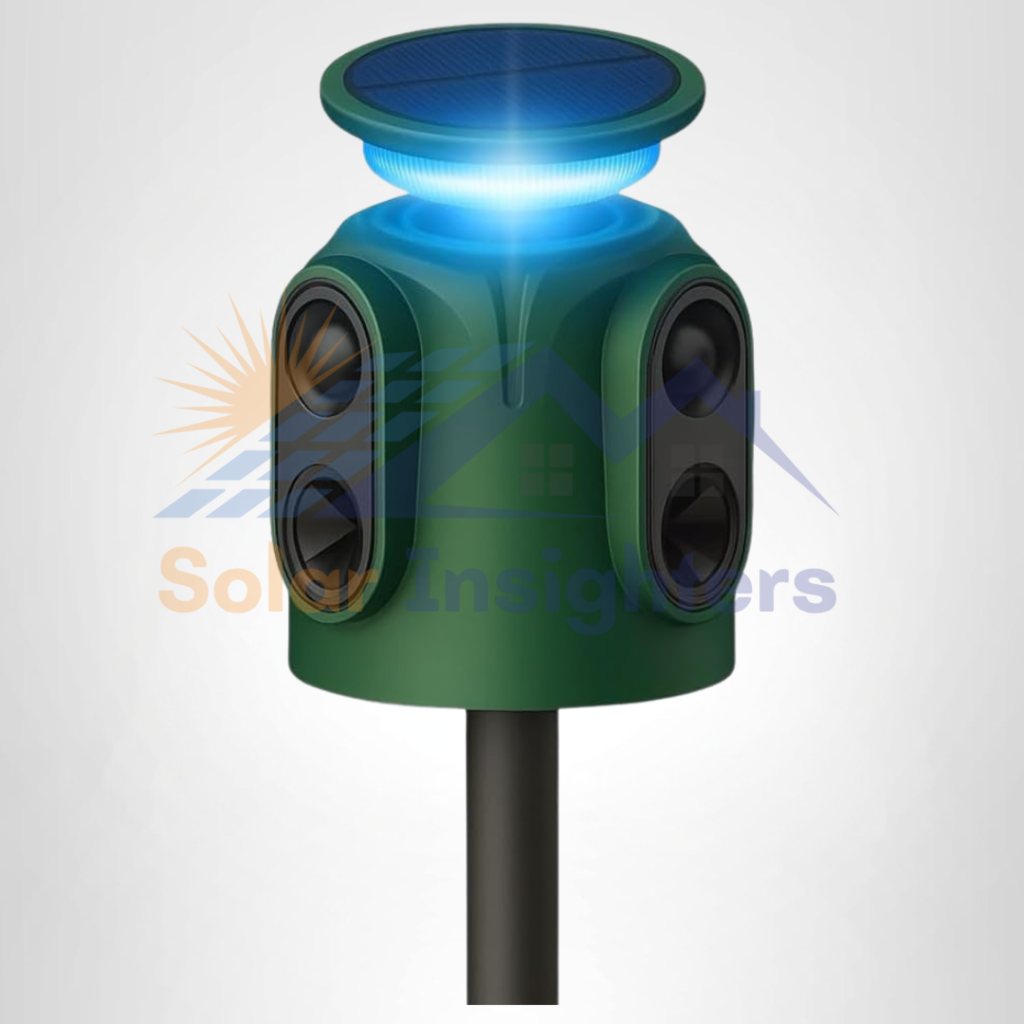
The Solar Ultrasonic Animal Repeller with Motion Detection is an eco-friendly outdoor device designed to deter unwanted animals and pests using motion-triggered ultrasonic sound and visual alerts — all powered by solar energy. Instead of harming wildlife or pests, it emits ultrasonic frequencies and sometimes flashing lights that encourage animals to stay away from gardens, lawns, crops, driveways, and outdoor spaces.
This review explores design, performance, solar efficiency, motion detection accuracy, installation advice, pros & cons, and real-world usefulness in 2026.
What It Is & How It Works
A solar ultrasonic animal repeller uses three key technologies:
Solar-powered charging: Captures sunlight to recharge the internal battery, eliminating the need for wiring or frequent battery replacement.
Motion detection sensor: Detects animal movement via a PIR sensor and triggers ultrasonic sound and (in some models) flashing LED lights.
Ultrasonic deterrent: Produces sound at frequencies unpleasant to mammals and some pests but inaudible to most humans, encouraging animals to leave the area.
This combination helps protect gardens and outdoor spaces without traps, poisons, or harmful methods.
Key Features
| Feature | Details |
|---|---|
| Product | Solar Ultrasonic Animal Repeller with Motion Detection |
| Power Source | Solar panel with rechargeable battery |
| Sensor | Passive Infrared (PIR) motion detection |
| Ultrasonic Output | Frequency range targeting animals (varies by model) |
| LED Alerts | Flashing light when motion activates (optional) |
| Coverage | Varies by sensor range (meters/feet) |
| Installation | Ground stake or wall mounting |
| Weather Resistance | Outdoor-rated housing |
| Use Cases | Garden, yard, patio, crops, fences |
Design & Build Quality
These repellers are built with weather-resistant materials to withstand rain, sun, dust, and seasonal conditions outdoors. A sturdy housing and sealed components help ensure longevity without rust or corrosion. The solar panel is typically mounted on top at an angle to harvest sunlight efficiently, while the ultrasonic speaker and sensor face outward for broad detection coverage.
Solar Charging & Efficiency
The standout advantage of this device is solar power:
Daytime solar charging: The integrated panel captures sunlight and stores energy in an internal rechargeable battery.
Energy autonomy: With sufficient sunlight, the repeller operates rest of the day and night without external power.
Low maintenance: No need for wiring or frequent battery swaps.
Solar performance depends on:
Direct sunlight exposure: Best for maximum charge
Shade or cloudy days: Moderate performance with reduced runtime
Panel positioning: Affects midday charge efficiency
Good placement (full sun) maximizes daily charge and motion response.
Ultrasonic & Motion Detection Performance
Motion detection is usually handled by a PIR sensor that senses heat and movement within its range. When triggered, the repeller emits ultrasonic sound and sometimes a flashing LED light to startle animals.
Common performance traits:
Detection range: Typically several meters (varies with model)
Activation angle: Wide enough to cover yards and garden zones
Ultrasonic frequency: Targets mammals and some pests — designed to be uncomfortable for animals but harmless
This system works well for animals like:
Stray cats and dogs
Raccoons and foxes
Deer and rabbits
Rodents and small wildlife
Effectiveness depends on animal sensitivity to ultrasonic frequencies and distance from the device.
Installation & Ease of Use
Installing the solar ultrasonic animal repeller is straightforward:
Choose a sunny location with good line of sight to areas you want to protect.
Mount the unit using a ground stake or wall attachment.
Point the sensor toward the most frequented animal paths or garden patches.
Allow solar charging for several hours before first use.
The no-wiring design makes installation a DIY-friendly job for most homeowners.
Pros & Cons
| Pros | Cons |
|---|---|
| Solar powered — no electricity cost | Solar performance depends on sunlight exposure |
| Humane, non-lethal deterrent | Effectiveness varies with animal species |
| Easy installation with no wiring | Ultrasonic range limited to set radius |
| Motion detection triggers only when needed | Some animals may ignore or habituate |
| Weather-resistant construction | Flashing lights may annoy nearby residents |
| Low maintenance — long outdoor life | Best results require good placement |
Ideal Use Cases
Garden & Flower Beds:
Protect vegetables, flowers, and plantings from nibbling wildlife.
Lawns & Yards:
Discourage stray animals from entering home turf.
Driveways & Perimeters:
Low-effort deterrent around property edges.
Patios & Outdoor Areas:
Reduce visits by neighborhood cats or small mammals.
Performance Tips
Position Solar Panel for Best Sunlight: Place where it gets morning and midday sun for full charge.
Adjust Sensor Height: Install at animal knee height for optimal detection.
Combine with Physical Barriers: Ultrasonics work best with fencing or mesh in high-traffic animal zones.
Monitor Initial Behavior: Some animals may need repeated deterrence before avoidance.