
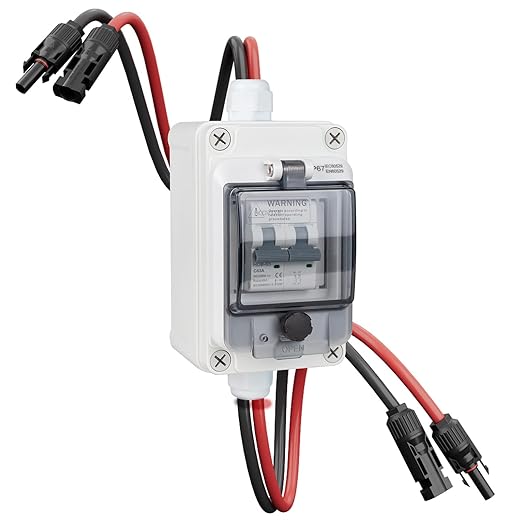
63 Amp Solar Panel Disconnect Switch
- MINIATURE CIRCUIT BREAKER: 63 Amp;550 VDC; Built-in arc-extinguishing magnet, flame-retardant shell, silver contacts, and pure copper coils ensure safety and reliability
- IP67 DC BREAKER BOX: Made of PC and ABS, offering high impact resistance, heat resistance, flame retardancy and UV protection for outdoor solar setups
About this item
63 Amp Solar Panel Disconnect Switch
The 63 Amp Solar Panel Disconnect Switch is a vital safety component for solar power systems. It allows you to safely disconnect your solar panels from the rest of the system for maintenance, inspection, or emergency shutdown. Designed for medium to large solar arrays, this disconnect switch combines robust construction with reliable performance for residential and small commercial applications.
What It Is & Why It Matters
A solar panel disconnect switch is a manual switch that interrupts the electrical connection between your solar array and the inverter or charge controller. This means you can quickly and safely isolate the solar panels when needed — protecting technicians, homeowners, and equipment during maintenance or fault conditions.
Design & Build Quality
The 63 Amp Disconnect Switch is built with high‑quality, durable materials that can withstand outdoor conditions. It typically features a rugged housing with a clearly labeled on/off switch or handle, and is designed to be mounted on a wall, solar structure, or electrical enclosure.
The components are generally rated for high current and electrical loads, ensuring dependable operation under continuous use. Safety features like insulated terminals and protective covers help prevent accidental contact with live parts.
Performance & Uses
1. Solar System Safety:
The primary use of this disconnect switch is to safely cut off power from solar panels before servicing or troubleshooting any part of the system.
2. Code Compliance:
In many regions, electrical codes require a disconnect switch for solar installations so that emergency responders and technicians can quickly isolate power.
3. System Protection:
It helps protect sensitive electronics such as inverters, charge controllers, and batteries by isolating the energy source during faults or unexpected conditions.
4. Maintenance & Service:
Easy operation of the switch allows safe access for cleaning panels, replacing wiring, or upgrading system components.
Key Features
63 Amp Rated Capacity: Handles medium to high current solar arrays.
Manual ON/OFF Lever or Handle: Simple and intuitive operation.
Durable Housing: Built to withstand outdoor exposure and rough environments.
Safety Protection: Insulated points and protective covers reduce risk of accidental contact.
Versatile Mounting: Designed for wall or panelboard installation.
Installation Tips
Mount the switch in a dry, accessible location near the solar array or main service panel.
Ensure that all wires are correctly labeled and routed cleanly.
Follow proper grounding practices to prevent electrical hazards.
Turn the switch to the OFF position before performing any maintenance on the system.
Always confirm power has been disconnected before touching wiring or components.
Pros & Cons
| Pros | Cons |
|---|---|
| Provides a safe way to disconnect solar panels | Manual operation — not automated |
| Helps meet electrical code requirements | Requires basic electrical knowledge for installation |
| Rated for 63 Amp solar systems | Not suitable for very large industrial systems |
| Durable and reliable build | No built‑in surge protection |
| Simple and intuitive operation | Additional protection devices may still be needed |
Who Should Buy It?
Recommended For:
Homeowners with grid‑tied or off‑grid solar systems
Solar installers and electrical contractors
DIY solar enthusiasts working on medium‑sized arrays
Anyone needing a safe way to service solar equipment
Not Ideal For:
Very large commercial or industrial solar installations
Users without any electrical safety knowledge
Systems requiring automated or remote disconnects